
How to Set Boundaries Without Guilt
A Guide for Women Who Do Too Much
Am I doing too much? That's not a question I started asking myself until fairly recently given the stage of life that I am in.
It's also worth pointing out that for years I felt like I had a capacity issue when really it was more of the choices that I was choosing to make (or not) that impacted what was on my plate. It wasn't capacity that I needed more of – it was boundaries.
If you struggle to tell people no or to feel like everyone's worries are somehow your concern - you're going to feel overwhelmed.
The good news is: You're not alone.
Bad news? You need to fix it.
If you don't have boundaries, you will get burned out. And you will stay burned out.
As high achievers, we naturally want to help people, make ourselves available, and be the one that everyone can count on. Which is fine in small doses. It's not fine when it becomes your default setting.
And here's another thing many people won't tell you.
Setting the boundary itself is only half the battle. Not feeling guilty about it brings on another conversation entirely.
Which is why we are about to have the conversation – right now.
Understand Why Boundaries Feel So Hard
It's not enough for me to just say "this needs to change."
No shit.
That's the advice of every other self-help author, TikTok or Instagram influencer, and even some YouTube University graduates.
When it comes to boundaries, the hard part is not figuring out what they are. That's the easy part. And typically, it's the opposite behavior of what you wanted to do in the first place but feared what the reaction from others would be.
This is why the enforcement of boundaries for most of us is really difficult.
Nobody likes to disappoint others.
Nobody wants to be seen as a selfish human being.
Nobody aspires to lose the approval or connection that you spent time building.
But the reality is this: Boundaries don't push people away. They create the space to develop healthier relationships for people who deserve to be in your life.
Most of the time when people talk about boundaries, we talk about them in a way that makes it seem like the person enforcing them is trying to be difficult. Truth is, when people remain present in your life after learning who you really are...those are the people who truly want a relationship with you. The real you. Every version of you. Not just the one that makes them most comfortable.
Redefine What Boundaries Actually Are
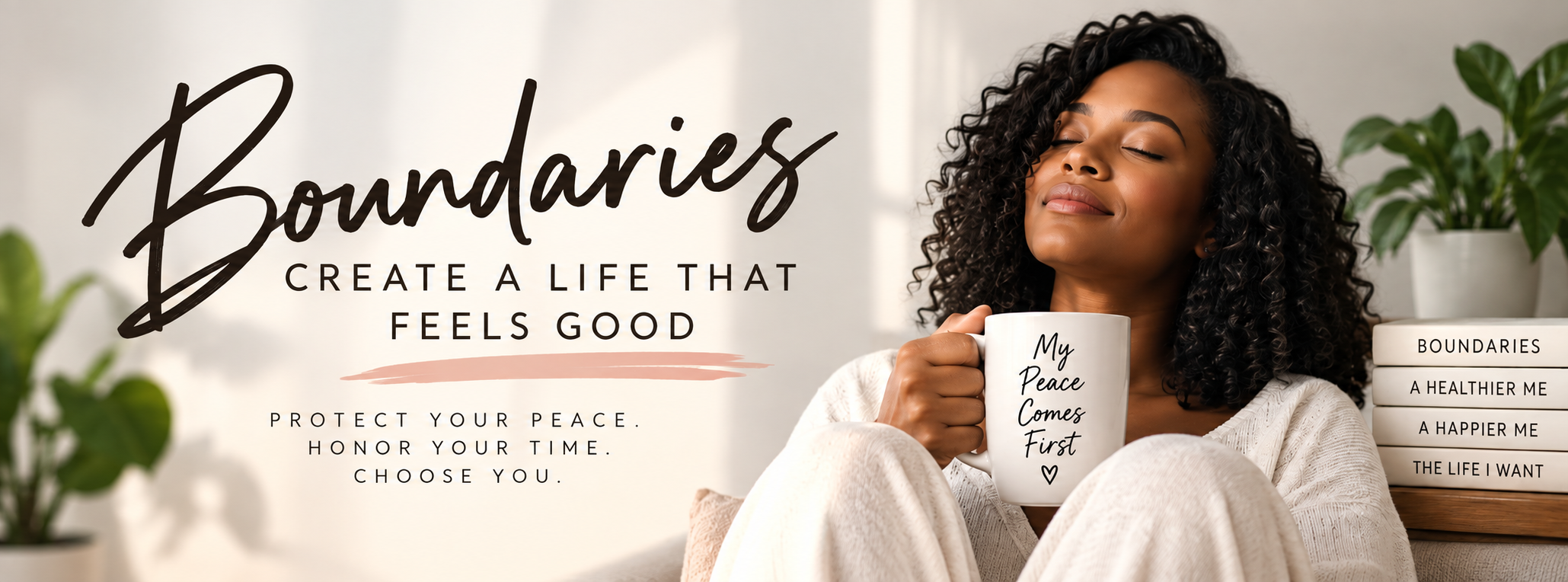
Telling someone that you are reserving time specifically for your family isn't harsh, selfish, or mean. It's acknowledging that you recognize that these people in your life deserve your undivided attention.
Communicating that you will not be working during non-work hours isn't lazy or entitled. It's an acceptance that you can put your best foot forward in the office by taking appropriate breaks away from projects and tasks.
Establishing your needs with a new partner that you expect them to state their intentions in the same way you are – isn’t high maintenance. It's clearly stating what you need from them on an ongoing basis to make your relationship work.
Boundaries aren't mean or harsh methods to keep people away from you. It's a way to clearly communicate what you expect from others. A habit that promotes self-respect. Tangible ways that you can protect your time and energy.
Enforcing boundaries is a way to maintain honesty with those around you - as well as yourself.
And typically, boundaries feel very hard to maintain at first because society teaches us to people-please and self-sacrifice to keep the status quo.
Start Small and Build Confidence
Building boundaries isn't a small task. It's a huge thing to take on so please trust me when I say that "go big or go home" does not apply here. As a matter of fact, that's literally the worst approach you could have to managing boundaries (ask me how I know).
This doesn't have to start off as a complete overhaul of everything you do with everyone you know overnight.
Building better boundaries can be saying to someone, "I can't this week."
Why that instead of a no?
Because saying no outright when you're not used to it can be challenging. And from experience, the more challenging something is - the less likely you are to stick with it.
Here's another example of building better boundaries that even I am currently working on: Not immediately responding to messages.
Again - you may be asking why.
I doubt that I am unique when I explain that promptly responding to all emails, phone calls, and text messages over the last five years has gotten me absolutely buried with more things to do, respond to, or think about. And the worst part about shifting this boundary? When you begin enforcing it - people nearly panic because it's "out of character" for you to respond. Many times, they just send more messages. The hamster wheel will continue if you don't create some sort of system or structure on how you respond.
If even that feels too difficult to do, start with a simple assessment of your day (and hopefully build up to a week, month, quarter, etc.). Look at your schedule and be realistic about whether you have the time to do what's on your plate. And if you don't – adjust.
Many things that show up on our schedule aren't even an emergency; it's just things that appear on our calendar because people have asked for our attention.
Stop Over-Explaining
Now that we've talked about a few things you can do to start building better boundaries, let's talk about one thing you should not start doing: Over-explaining yourself.
Naturally, any person who has had poor boundaries in the past will find themselves explaining to others why they suddenly are creating structure in their lives.
What if I told you that one of the biggest mistakes you can make is justifying why you are trying to make your life better.
People don't need to know that you have a lot on your plate, and you're tired, and you've been traveling all month. They simply just need to know that "no, you're not available." Full stop. End of story.
Saying you are unable to commit to something is more than enough reason for someone to understand that they need to find an alternative.
We over explain because we feel guilty that we aren't showing up in the same way that we have been previously. But when you truly step back and think about that, you are still thinking that someone is going to react negatively when you do that. You aren't serving your best interest if you are still concerned about others' response to a lifestyle adjustment that you've made.
Expect Discomfort (It’s Normal)
It's important to remember that you aren't doing this to be "mean" or "difficult." You are making these changes because physically and mentally your body has told you several times it can no longer function at the pace that you are trying to push it towards. Everyone needs a way to live their lives sustainably. If you are clear in your communication, those that respect your boundaries will give you the space to enforce them; just like you would do in return. And that, my friend, is enough.
Setting boundaries feels very uncomfortable at first. And depending on the boundary and who it involves, there may be some things you encounter that still make you feel uneasy.
That doesn't mean it's wrong. It means that you are encountering new territory...because this is something new.
No one has come out on the other side of growth saying that the entire process made them feel comfortable. It's important to recognize this as your discomfort is going to be a part of that growth. That doesn't mean it's a sign that you need to stop what you're doing. If anything, it's a sign you're on the right track.
Pay Attention to Who Respects Your Boundaries
Now, I've hinted at this a couple of times already but now I'm specifically going to call this out.
Pay attention to those who respect your boundaries, and who think they have the option to discard them.
Healthy relationships with people in your life will adjust. Toxic relationships will push you to revert to the former version of yourself.
Remember: that former version of yourself wasn't a bad person, but that version also created many unsustainable patterns that have led to your burnout, exhaustion, and overwhelm.
If someone is consistently resisting your boundaries, they are trying to tell you something important: They are not on board with who you are trying to become. They value who you were.
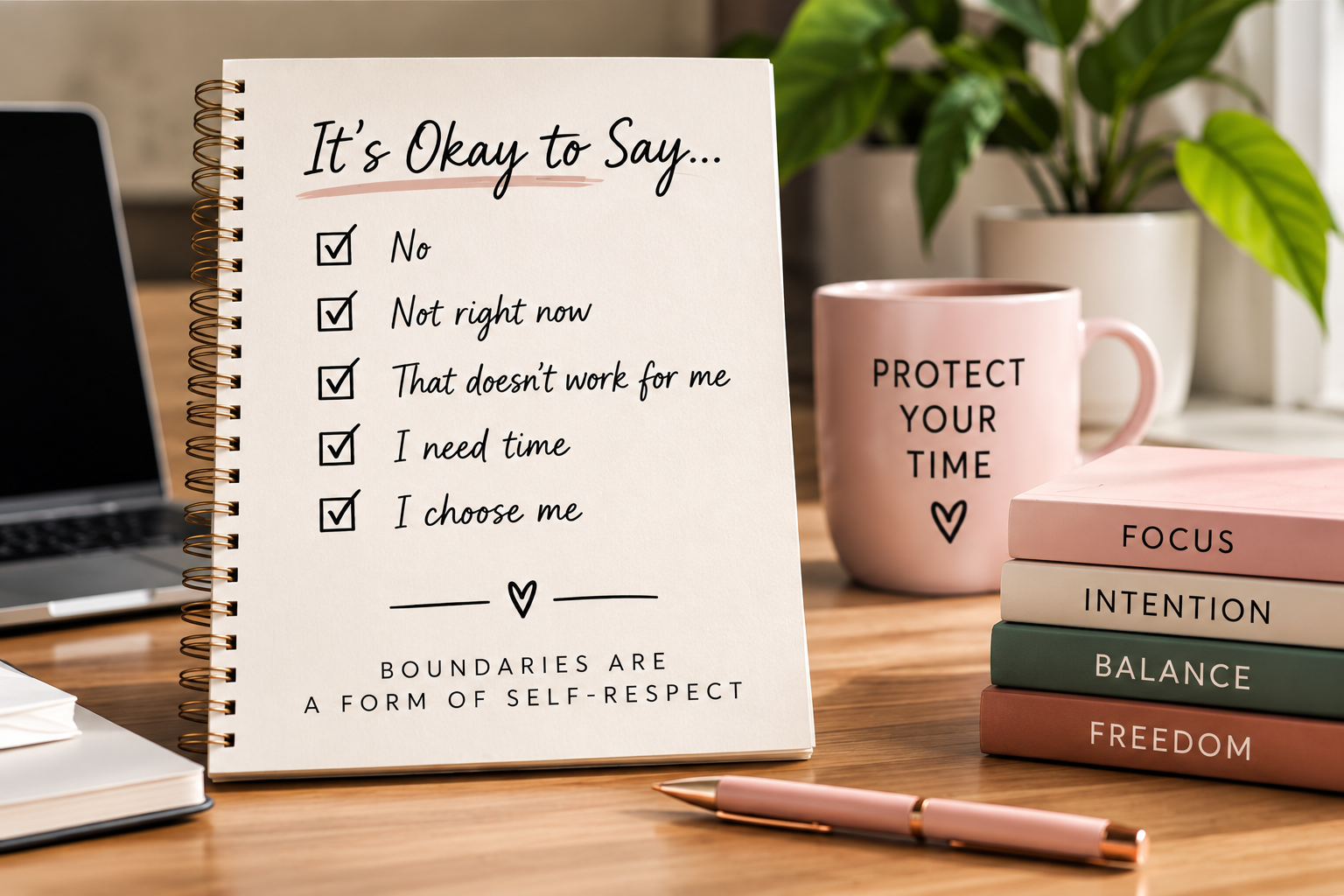
Case in point: I have incorporated focus time on my calendar because people would otherwise consume my time with unnecessary meetings that could have been emails. Even worse, we would spend half the time having small talk when I had a list of 20 things to do.
The resistance?
People would schedule over the focus time until it became clearer that I was not going to attend unless told otherwise (by my boss mind you – not them). Risky in a work setting? Yes. But my work still gets done at a high level of quality and my clients are satisfied, which is my main focus. Not others who are upset that I didn't attend another unnecessary meeting.
Additionally, I'm exceeding revenue goals and expectations.
Moral of the story? Setting a boundary tends to bring out others' true feelings about how they view you as a person. And oftentimes, you will find that much of the resistance is surrounding what you no longer will be able to do for the person – not the boundary itself.
Anchor Your Boundaries in Your Priorities
For boundaries to be effective, you do have to be clear on what matters and what does not.
Why?
Because when you're clear on what matters, boundaries become much easier to enforce.
If you're not sure where to start, recognize that 1) that's normal and 2) there's no wrong answer. Many of us must ask ourselves what kind of life we want, and what deserves our energy.
Those questions will take you to your north star of where you will find the most fulfilment in your life.
Be honest about what it is you want so you can let your priorities guide your decisions, not your family, your partner, your career, or society's expectations of you.
Where Do We Go From Here?
Setting boundaries is the easy part, but doing so without guilt is something that has to be learned - and trust me I know and empathize. Depending on the situation, I am still learning not to feel guilty about setting parameters that are best for me long-term.
Often the guilt isn't justified because you are doing this to prevent burnout and reclaim your time. It's not about doing less. You are doing what actually matters.
Stop overextending yourself and begin living your life with more intention.
👉🏾 Check out my podcast to hear more stories on exploring boundaries, Superwoman Syndrome, and other ways to live a more sustainable life.
👉🏾 If you're suffering from burnout and looking for a sustainable recovery plan, check out my strategy services to learn how I can support you in building healthier boundaries.
